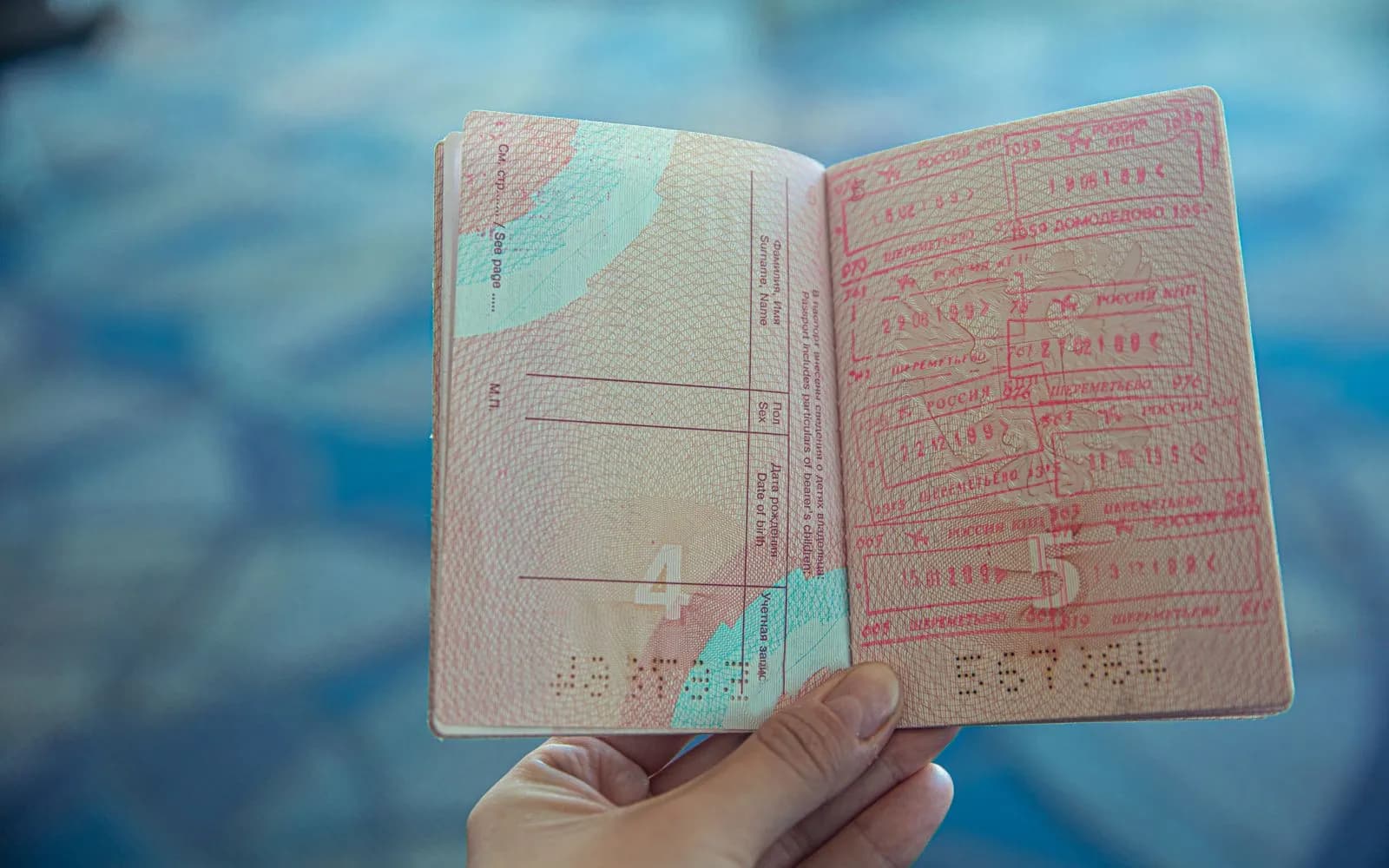

As of November 2026: Americans still need no visa for stays of up to 90 days in Italy, but your passport must be valid for at least three months beyond the day you plan to leave the Schengen area, and you will now be fingerprinted and photographed at the border the first time you arrive under the EU's Entry/Exit System (EES). ETIAS, the separate online travel authorization, is not yet in operation and has no announced start date.1,4
This is the part of trip planning where rules change faster than guidebooks, so I have dated everything below and linked the official sources. When I plan trips for clients at Italy Awaits Travel, I re-check these pages in the weeks before departure, and I suggest you do the same.
What passport validity does Italy require for Americans?
Italy follows the Schengen rule: your passport should have been issued within the previous 10 years and should remain valid for at least three months after your intended departure from the Schengen area.5 For most American adults the 10-year issue rule is not a problem, since adult passports last 10 years. It can matter if you renewed an old passport long ago and the issue date is close to the limit.
The U.S. State Department's country guidance for Italy points travelers to the Schengen requirements, and its general advice is to carry more validity than the legal minimum.5 My own rule for clients is simple: if your passport has under six months left on the day you fly, renew it first. Airlines apply the rules at check-in, and a denied boarding is far more expensive than a renewal fee.
Also check that the passport is in good condition and that your name matches your flight booking exactly.
How long can Americans stay in Italy without a visa?
Up to 90 days in any rolling 180-day period, counted across the whole Schengen area, not per country.1 Days in France, Spain, Greece and every other Schengen country all count toward the same 90.
Two practical points:
- The 180-day window rolls backward from each day, so it is not a calendar block. If you spent six weeks in Spain in the spring, those days may still count against a summer trip.
- Before EES, overstays were caught by hand-counting passport stamps. EES now calculates your days automatically and flags travelers who exceed their authorized stay.1
Most of my clients spend two to four weeks in Italy and never come near the limit. If you are planning a long stay, a slow-travel season or a work-remote summer, talk to the Italian consulate about the right visa category rather than stacking short stays.
What is the EU Entry/Exit System (EES), and is it running now?
EES is an automated border system that records non-EU short-stay visitors when they enter and leave the Schengen area. It began on 12 October 2025 and, according to the European Commission, became fully operational on 10 April 2026.1 It replaces the manual passport stamp.
For an American on a first visit, the system records:
- your name and passport data
- your fingerprints and a facial image
- the date and place of each entry and exit, and any refusal of entry1
The record is kept for three years, and on later visits the system verifies you rather than enrolling you again.7 The EU rules also exempt some travelers entirely, including holders of long-stay visas or residence permits issued by an EES country, and nationals of Andorra, Monaco and San Marino.2 If you own a home in Italy and hold a permesso di soggiorno, you use the staffed lane and are not fingerprinted.
Note that EES applies only when you cross the external Schengen border. Flying from Rome to Paris, or taking a train from Milan to Switzerland, does not trigger it.
What happens at Rome Fiumicino and Milan Malpensa?
Italian press reported that EES started at Fiumicino and Malpensa on 12 October 2025 and at other airports from 20 October.3 The border police run the checks, but each airport organizes its own queues, so details differ.
The usual sequence for a first-time arrival, based on official descriptions and recent reporting:
- Follow the signs for non-EU or "all passports" passengers.
- Go to a self-service kiosk if one is open, and scan your passport.
- Give fingerprints and have your photo taken.
- Continue to a border officer, or an e-gate where available, who may ask where you are staying and when you are leaving.
Some travelers are processed in minutes. Others have waited a long time. In April 2026 Airports Council International reported waits of two to three hours at peak times at Italian airports, and in June the chief executive of Aeroporti di Roma, which runs Fiumicino and Ciampino, told the Financial Times he was "very concerned" about the summer.6,7 The airport industry has said the kiosks have not always worked as intended.6
Can Italy pause the biometric step?
Temporarily, yes. The Commission has said the rules allow biometric collection to be suspended when exceptional circumstances cause excessive wait times.6 A temporary EU provision allowed border police to pause biometrics at a given crossing point for up to six hours at a time, and it was scheduled to lapse on 6 September 2026.8 Italy and eight other countries asked the Commission in July to keep that flexibility. I could not find an official Commission decision confirming what applies now, so assume that biometrics will be required and treat any pause as a bonus, not a plan. Even when biometrics are paused, your passport is still checked, your entry is still recorded, and your 90/180 count still runs.
Which queue should you join?
At Italian airports the choice is between the EU/EEA lane and the "all passports" or non-EU lane. As an American you use the non-EU side. Families with young children should look for a staffed lane or ask an officer, since kiosks are designed for adults and older children. Do not stand in the EU lane to save time; you will be sent back.
How much extra time should you allow?
For arrivals, there is no connection to miss if Italy is your first Schengen stop, but your driver, hotel check-in and any timed first-day reservation depend on it. I tell clients to assume 90 minutes to two hours from the aircraft door to the arrivals hall at Fiumicino or Malpensa in peak months, and to avoid booking anything important for the first two hours after landing.
For departures, EES also records your exit, which can mean a slower outbound passport control. Arrive at the airport earlier than you did before 2025, and avoid cutting it close if you travel to the airport from another city on the same morning.
If you are arriving on a tight schedule, our guide to first-time mistakes in Italy covers the other logistics that tend to catch people out on day one.
What about ETIAS: do Americans need it yet?
No. As of November 2026, ETIAS is not in operation, and you cannot and should not apply for it.4
Here is what I can say with confidence:
- ETIAS is a pre-travel online authorization for visa-exempt travelers, including Americans. It is a separate system from EES and is not a visa.3
- The official EU site previously gave a target of the last quarter of 2026. In July 2026 the Financial Times reported, and The Points Guy relayed, that eu-LISA, the agency building the system, acknowledged that launching by the end of this year was no longer feasible, with 2027 now expected and no specific date given.9
- The EU has said it will announce the start date publicly well ahead of launch.4
- The fee is reported as EUR 20 per application, up from the originally proposed EUR 7.9 I could not verify from an official page which age groups are exempt from the fee, so check that when the system opens.
Be careful with look-alike websites. Several commercial sites sell "ETIAS applications" today; none of them can give you an authorization that does not yet exist. When ETIAS opens, apply only through the official EU channels linked from travel-europe.europa.eu.
What if you connect through another Schengen airport?
If you fly, say, New York to Frankfurt to Rome, your entry check (and EES registration) happens in Frankfurt, the first Schengen airport you land in. The onward flight to Rome is then a domestic-style Schengen flight with no passport control, though you should still carry your passport because airlines and police can ask for ID.
The reverse matters on the way home. If you leave Italy by flying to Paris and connecting to the U.S., your exit is processed in Paris. Allow for that when you choose connection times. Connecting in a non-Schengen hub such as London, Dublin or Istanbul means you clear Italian border control when you land in Italy.
If your trip combines countries, our sister site has a helpful overview of first-time mistakes in France.
What do minors need to enter Italy?
Every traveler needs their own passport, including infants. EES applies to children too, with some differences in how biometrics are taken: under EU rules, children under 12 are not required to give fingerprints, though a facial image is still taken.
If a child travels with only one parent, or with grandparents, a school group or friends, I recommend carrying a signed and, ideally, notarized consent letter from the absent parent or parents, along with a copy of the birth certificate. I am not aware of a universal Italian legal requirement for it, but border officers and airlines can ask questions, and a letter removes the friction. Confirm the current expectations with the Italian consulate serving your state.
For the full family planning picture, see our guide to Italy with kids.
A short pre-departure checklist
- Passport valid for at least three months after departure from Schengen, ideally six, and issued within the last 10 years
- No visa needed for 90 days, and no ETIAS yet
- Count your Schengen days over the last 180
- Photograph your passport, flight and hotel details, so you can answer an officer's questions quickly
- Keep your first-day plans loose, and book arrival transfers with flight tracking
- Check travel-europe.europa.eu and travel.state.gov the week before you fly
- Your timing choices matter too, since peak months mean heavier airports, and booking early gives you more flexibility with arrival days
Plan your trip with Tamar
The border process is a small part of a good trip, but it is the part where a little preparation saves the most stress. If you would like help building an Italy itinerary that accounts for arrival timing, connections and a calm first day in Rome or elsewhere, get in touch and we will start planning.
Frequently Asked Questions
Do Americans need a visa for Italy in 2026-27?
No. Americans can visit Italy for up to 90 days in any 180-day period without a visa. You do need a passport that meets the Schengen validity rules, and you will be registered in EES at the border.
Is ETIAS required to enter Italy right now?
No. As of November 2026 ETIAS is not in operation, and no official launch date has been announced. Reports from July 2026 point to 2027. The fee is reported as EUR 20, and you should apply only through official EU channels once it opens.
Will I be fingerprinted when I arrive in Italy?
Usually yes, on your first entry under EES. Adults and most children over 12 provide fingerprints and a facial image at a kiosk or with a border officer. On later trips the system verifies you against the stored record. Biometric collection can occasionally be paused when queues are exceptional.
How early should I arrive at the airport when flying home from Italy?
Arrive earlier than you did before EES, particularly at Fiumicino and Malpensa in peak months, because exit checks are also recorded. Following your airline's international guidance and adding a cushion for passport control is sensible.
Does a connection in Frankfurt, Paris or Amsterdam count as entering Italy?
Your border check happens at the first Schengen airport where you land, so you are registered there, not in Italy. The onward flight inside Schengen has no passport control.
References
- European Commission, Migration and Home Affairs — "Entry-Exit System" (2026). home-affairs.ec.europa.eu/.../entry-exit-system_en
- European Commission — "The Entry Exit System is fully operational since 10 April 2026. Who is exempt?" (27 July 2026). home-affairs.ec.europa.eu/news/...who-exempt
- European Union — "Travel to Europe: EES" (official traveler information). travel-europe.europa.eu/ees_en
- European Union — "Travel to Europe: ETIAS" (official traveler information). travel-europe.europa.eu/etias_en
- U.S. Department of State — "Italy: International Travel Information." travel.state.gov/.../Italy.html
- ANSA — "Aeroporti di Roma: risk of summer chaos with biometric checks at EU entry points" (25 June 2026). ansa.it/europa/en/news/2026/06/25/...
- The Local Italy — "What to expect if you're travelling to Italy this summer" (21 April 2026). thelocal.it/20260421/ees-what-to-expect...
- Euronews — "Travelling to Europe? EES border checks are changing from 6 September" (4 September 2026). euronews.com/travel/2026/09/04/...
- The Points Guy — "EU delays ETIAS 'visa' system until 2027" (8 July 2026). thepointsguy.com/news/eu-etias-delayed