Rome
Ancient history meets vibrant modern life
Rome earned its nickname as the Eternal City through nearly three thousand years of continuous history, and visiting here means walking through layers of civilization that few other places on Earth can match. Ancient temples stand beside Renaissance palaces. Baroque fountains splash in piazzas where emperors once watched chariot races. A neighborhood trattoria might occupy a building that has seen Caesars, popes, and revolutionaries pass by its door. This density of history could feel overwhelming, but Rome wears its past lightly, as simply part of daily life rather than a museum exhibit.
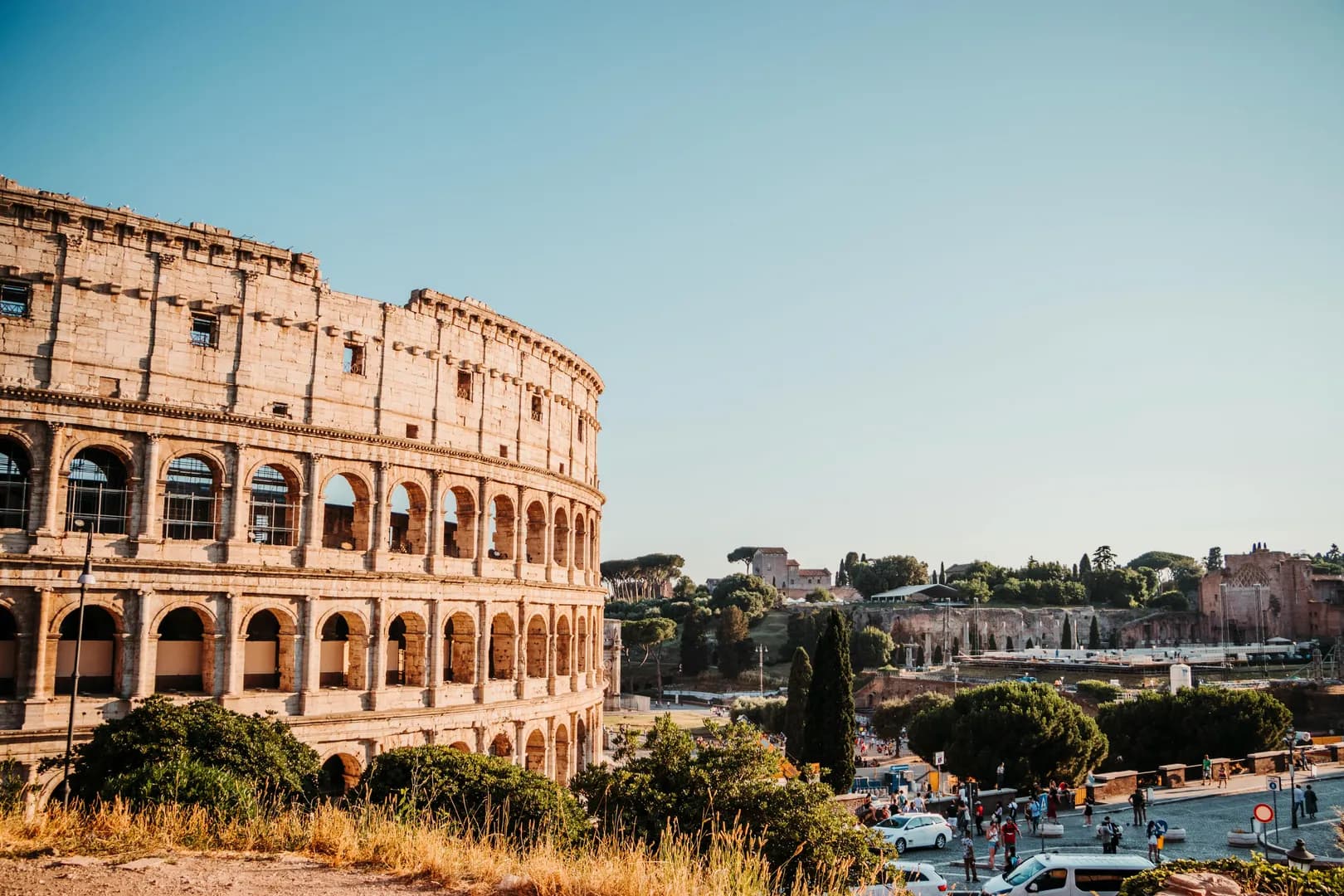
The ancient center of Rome concentrates the most famous monuments within walking distance of each other. The Colosseum dominates the landscape just as it did nearly two thousand years ago, when fifty thousand spectators gathered to watch gladiatorial combat and staged hunts of exotic animals. Modern visitors can explore the underground chambers where fighters and animals waited before emerging onto the arena floor, gaining a visceral sense of what this entertainment meant to Roman society. Nearby, the Roman Forum spreads across a valley that served as the political, religious, and commercial heart of ancient Rome, its columns and temples now romantic ruins that invite contemplation of past glories.
The Pantheon represents perhaps the most remarkable survival from ancient Rome, its massive concrete dome still the largest unreinforced concrete dome ever built. Standing inside this former temple, watching light stream through the central oculus, you witness engineering that modern architects still study with admiration. The building has survived largely intact because it was converted to a church in the early medieval period, a pattern of adaptation that characterizes Roman history throughout.
Vatican City occupies a small enclave within Rome but contains artistic and spiritual treasures that draw millions of visitors annually. The Vatican Museums hold one of the world's great art collections, culminating in the Sistine Chapel where Michelangelo's ceiling frescoes and Last Judgment overwhelm visitors with their scale and emotional power. St. Peter's Basilica expresses the ambition of the Renaissance papacy in architecture and art, from Michelangelo's Pieta to Bernini's towering bronze canopy over the high altar. Religious pilgrims and art lovers alike find their expectations exceeded by the reality of these spaces.
Beyond the famous monuments, Rome rewards exploration of its distinct neighborhoods. Trastevere, across the Tiber River from the ancient center, maintains a village atmosphere with its narrow cobblestone streets, ivy-covered buildings, and local bars where Romans gather in the evening. The neighborhood comes alive after dark, when restaurants spill onto the streets and the sound of conversation fills the air. Testaccio, built around an ancient dump of broken pottery amphorae, offers a more working-class character and some of the city's best traditional cooking. The Jewish Ghetto preserves memories of a community that has lived in Rome since before the Christian era, with restaurants serving Roman-Jewish specialties that you will find nowhere else.
Roman food deserves attention as a highlight of any visit. The traditional dishes are simple in conception but demand quality ingredients and proper technique. Cacio e pepe combines pecorino cheese and black pepper with pasta in a dish that requires skill to execute properly. Carbonara adds guanciale (cured pork cheek) and egg to create what many consider the perfect pasta. Supplì, fried rice balls with molten mozzarella centers, make an ideal snack while walking between sights. And the artichokes prepared in the Roman style, either Jewish-style (deep-fried whole) or Roman-style (braised with herbs), showcase a vegetable that appears throughout the cuisine.
The Borghese Gallery offers an art experience quite different from the vast Vatican Museums. This relatively small collection, housed in a villa surrounded by beautiful gardens, contains masterpieces by Bernini that show his sculptural genius in intimate proximity. The Apollo and Daphne, capturing the moment of mythological transformation, demonstrates technical virtuosity that seems to transcend the marble medium. Reservations are required and group sizes limited, ensuring a more contemplative viewing experience than many Roman museums allow.
Piazza Navona exemplifies the Roman genius for urban spaces, its elongated shape preserving the outline of the ancient stadium that once occupied this site. Bernini's Fountain of the Four Rivers commands the center, while cafes and restaurants line the edges, perfect for people-watching over a leisurely coffee or aperitivo. The Spanish Steps nearby attract crowds who gather on the famous staircase, taking in views over the surrounding rooftops. The shopping streets in this area hold luxury boutiques alongside traditional stores that have served Roman customers for generations.
Day trips from Rome reveal yet more layers of Italian history and culture. Ostia Antica, the ancient port of Rome, offers remarkably preserved ruins without the crowds that pack Pompeii. Tivoli holds two UNESCO World Heritage sites: the ancient Hadrian's Villa and the Renaissance Villa d'Este with its elaborate water gardens. The hill towns south of Rome provide glimpses of Italian life away from the tourist circuit, where lunch might stretch for hours and the afternoon pace slows to match the heat.
Roman daily rhythms shape the visitor experience in ways worth embracing. Mornings start with standing at a bar counter for espresso and perhaps a cornetto (croissant). Lunch remains an important meal, though not quite the extended affair it once was. The afternoon might include a rest during the hottest hours, following the traditional pattern even if formal riposo is fading in modern Rome. Evening brings the passeggiata, the ritual stroll that fills the streets with well-dressed Romans seeing and being seen. Dinner rarely starts before eight, often later, and can extend well into the night.
Planning a Rome visit means accepting that you cannot see everything and making peace with that reality. First-time visitors often focus on the ancient sites and Vatican, which provides a strong introduction to the city. Return visitors can explore neighborhoods in depth, seek out lesser-known churches with stunning art, or simply slow down and experience Rome as residents do. The city has welcomed visitors for thousands of years and remains one of the world's great destinations, always revealing new facets to those who take the time to look.
Experiences We Can Arrange
Quick Facts
Best Time to Visit
April to May and September to October offer ideal conditions. Summer is hot and crowded, though early morning visits beat the heat. Winter offers fewer tourists and a more authentic atmosphere.
Recommended Duration
Four to five days minimum for the highlights, though Rome rewards longer stays. You could spend a lifetime here and still discover something new.