Tuscany
Rolling hills, Renaissance art, and world-class wine
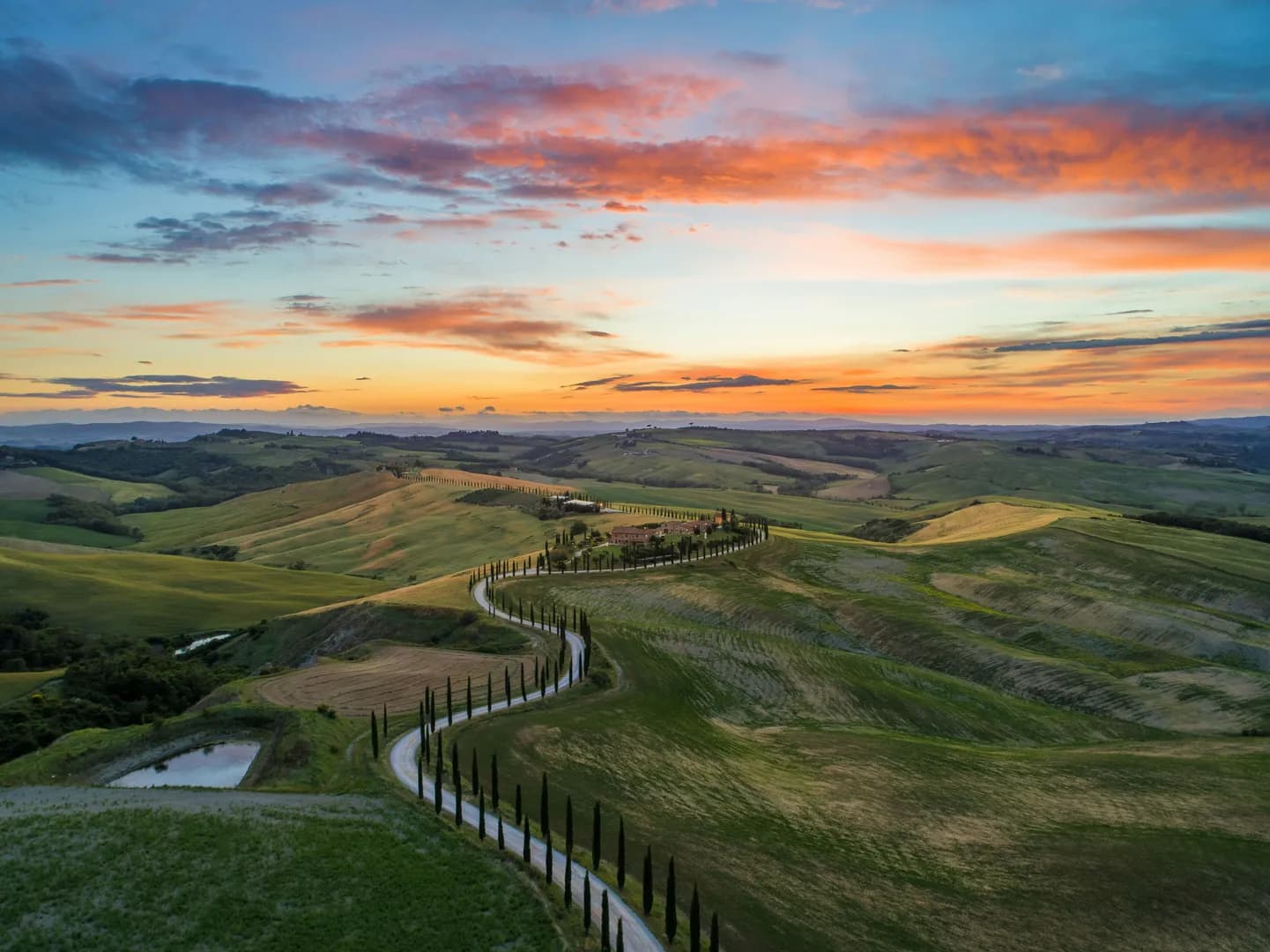
Tuscany occupies a special place in the imagination of travelers worldwide. This is the Italy you have seen in films, dreamed about over glasses of Chianti, and promised yourself you would visit someday. The good news is that the reality lives up to every expectation. The rolling hills really do glow golden in the afternoon light. The medieval towns really do crown hilltops like something from a Renaissance painting. And the wine really is that good.
The region stretches across central Italy, encompassing an extraordinary diversity of landscapes and experiences. In the north, you will find Florence, the cradle of the Renaissance and home to artistic treasures that changed the course of Western civilization. The Uffizi Gallery alone could occupy art lovers for days, with masterworks by Botticelli, Leonardo, and Michelangelo drawing visitors from every corner of the globe. Beyond the museums, Florence rewards those who simply wander, discovering artisan workshops, hidden churches, and family trattorias tucked down narrow streets.
South of Florence, the landscape transforms into the Tuscany of postcards and wine labels. The Chianti region unfolds in an endless succession of vineyards, olive groves, and stone farmhouses. This is where Sangiovese grapes have been cultivated for centuries, producing wines that range from everyday table wines to the prestigious Chianti Classico. Many of these vineyards welcome visitors for tastings, and some of the best experiences come from smaller family operations where the winemaker personally guides you through their production.
Siena offers a completely different character from Florence, with its famous fan-shaped Piazza del Campo and the Gothic cathedral that ranks among Italy's finest. The city maintains fierce local pride, expressed most dramatically during the Palio horse race held twice each summer. Even if you cannot time your visit to witness this centuries-old tradition, Siena rewards exploration with its medieval streetscapes and excellent restaurants serving traditional Sienese cuisine.
The hill towns scattered across southern Tuscany each possess their own distinct personality. San Gimignano is famous for its medieval towers, which once numbered over seventy and today still create one of Italy's most distinctive skylines. Montepulciano produces the robust Vino Nobile and offers spectacular views from its hilltop perch. Pienza was redesigned during the Renaissance as an ideal city and remains a jewel of urban planning, not to mention a center of exceptional pecorino cheese production.
The Val d'Orcia deserves special mention as perhaps the most photogenic landscape in all of Italy. This UNESCO World Heritage site epitomizes the Tuscan aesthetic with its gentle hills, isolated cypress trees, and winding white roads. Photographers chase the perfect light here at dawn and dusk, but even casual visitors find themselves reaching for their cameras constantly. The area around Montalcino produces Brunello, one of Italy's most celebrated wines, making this region essential for serious wine enthusiasts.
Beyond the famous destinations, Tuscany rewards those who venture off the main routes. Lucca, with its intact Renaissance walls perfect for walking or cycling, receives fewer visitors than it deserves. The thermal springs at Saturnia offer natural hot pools in a stunning setting. The Maremma coast provides beaches and the rugged charm of a less developed coastline. And throughout the region, agriturismos (farm stays) offer the chance to experience rural Tuscan life firsthand, often with home-cooked meals featuring ingredients grown on the property.
Food in Tuscany follows the Italian philosophy of using excellent local ingredients prepared simply. Ribollita, the hearty bread and vegetable soup, provides comfort on cool evenings. Bistecca alla fiorentina, the massive T-bone steak grilled over wood coals, showcases the quality of Chianina beef. Fresh pici pasta dressed with wild boar ragu speaks to the region's hunting traditions. And throughout it all, the bread arrives unsalted, a Tuscan tradition dating back centuries.
The Tuscan approach to life centers on enjoying good food, good wine, and good company without rushing. Lunch often stretches for hours, especially on weekends. Dinner rarely begins before eight in the evening. The afternoon may include a passeggiata, the traditional evening stroll, or simply sitting in a piazza watching the world go by. Visitors who embrace this rhythm find themselves relaxing into a pace of life that feels increasingly precious in our hurried modern world.
Planning a Tuscany itinerary requires making difficult choices, as the region offers far more than any single trip can encompass. First-time visitors often focus on Florence, Siena, and the Chianti region, which provides an excellent introduction. Those with more time might add the Val d'Orcia, the hill towns, or the coast. Return visitors often explore deeper, seeking out the lesser-known corners that make this region endlessly fascinating. However you approach it, Tuscany has a way of capturing hearts and inspiring return visits.
Experiences We Can Arrange
Quick Facts
Best Time to Visit
April to June and September to October offer ideal weather and fewer crowds. Harvest season in September and October is magical for wine lovers.
Recommended Duration
We recommend at least 5 to 7 days to explore Tuscany properly, though you could easily spend two weeks.