Venice
A floating masterpiece unlike anywhere else
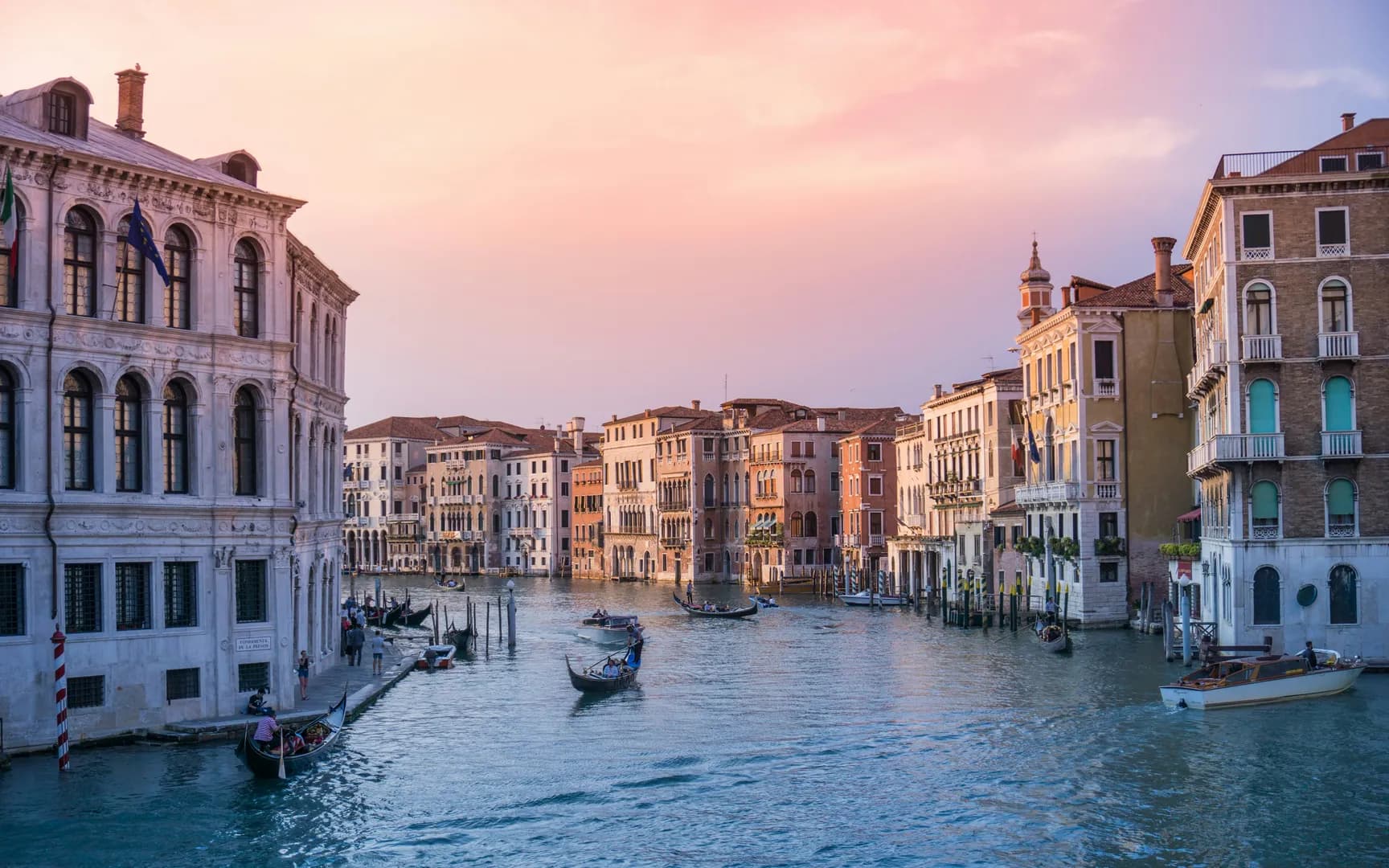
Venice exists in defiance of everything we know about how cities should work. Built on over one hundred islands in a shallow lagoon, connected by more than four hundred bridges, traversed by canals rather than streets, this city has confounded and enchanted visitors for centuries. Nothing quite prepares you for the first glimpse of the Grand Canal, lined with Gothic and Renaissance palaces, their facades reflected in waters that serve as the city's main thoroughfare. Venice is not merely picturesque; it represents a triumph of human determination over an impossible landscape.
The origins of Venice lie in the fall of the Roman Empire, when refugees from mainland cities fled to the lagoon islands to escape barbarian invasions. What began as a survival strategy evolved into one of history's great maritime powers. For centuries, the Venetian Republic controlled trade routes between Europe and the East, accumulating wealth that built the palaces, churches, and public buildings that astonish visitors today. The city's unique position between East and West influenced its architecture, its art, and its culture, creating something distinct from anywhere else in Italy.
St. Mark's Square serves as the ceremonial heart of Venice, and approaching it for the first time remains one of travel's great experiences. The basilica that dominates one end gleams with golden mosaics that reflect Byzantine influence, the legacy of Venice's close ties with Constantinople. The Doge's Palace adjacent to the basilica housed the government of the Republic for centuries, its delicate Gothic facade belying the serious business of statecraft conducted within. The two columns at the waterfront entrance mark the traditional gateway to the city, where visitors arriving by sea first set foot on Venetian soil.
Beyond St. Mark's Square, Venice reveals itself as a labyrinth that rewards wandering without purpose. The narrow calli (streets) twist and turn, crossing small bridges, opening suddenly onto quiet campi (squares) where neighborhood life unfolds. Getting lost here is inevitable and ultimately enjoyable, as each wrong turn leads to unexpected discoveries. A sudden view of a gondola passing beneath a bridge. A workshop where an artisan practices a traditional craft. A tiny bar where locals stand at the counter drinking small glasses of wine and eating cicchetti, the Venetian version of tapas.
The bacari, these traditional wine bars, offer one of the most authentic ways to experience Venetian culture. Standing at the counter, you point at the cicchetti displayed under glass, perhaps a small piece of baccalà mantecato (creamed salt cod) on bread, a slice of polenta with a sardine, or a meatball. Each piece costs a euro or two, and you order un'ombra, a small glass of wine, to wash it down. Moving from bacaro to bacaro, sampling different specialties at each, provides both an excellent meal and an intimate window into how Venetians actually live.
The Grand Canal winds through the city in a broad S-curve, and traveling its length by vaporetto (water bus) offers a panoramic introduction to Venetian architecture. Palaces from different eras line both banks, their styles ranging from Byzantine to Gothic to Renaissance to Baroque, each reflecting the tastes and fortunes of the families who built them. The Rialto Bridge marks the historic commercial heart of the city, and the fish market that operates nearby each morning continues traditions that stretch back centuries. Arriving early to watch the fishmongers arrange their displays of Adriatic seafood connects you to the Venice that exists beyond tourism.
The museums of Venice hold treasures that justify extended exploration. The Accademia Gallery presents the full sweep of Venetian painting, from Byzantine-influenced works through the glories of Titian, Tintoretto, and Veronese. The Peggy Guggenheim Collection offers modern art in the intimate setting of her former home on the Grand Canal. The Ca' Rezzonico provides a glimpse of eighteenth-century Venetian life, with period rooms and paintings that capture the decadence of the Republic's final century. And countless churches contain masterworks by the greatest Venetian artists, many of them still in their original settings.
The islands of the lagoon expand the Venice experience beyond the main city. Murano has produced glass for over a thousand years, a tradition established when furnaces were moved off the main island to reduce fire risk. Watching a master glassblower shape molten material into delicate forms demonstrates skills passed down through generations. Burano attracts visitors with its brightly painted houses, each one a different color, creating one of the most photographed scenes in the Venetian lagoon. The island also maintains traditions of lace-making, though today much of what you see for sale comes from elsewhere. Torcello, largely abandoned now, preserves the oldest structures in the lagoon, including a cathedral with Byzantine mosaics that predate even St. Mark's.
Venice faces well-publicized challenges, from flooding to overcrowding to the departure of permanent residents. The acqua alta (high water) that periodically floods St. Mark's Square and low-lying areas has increased in frequency, prompting the construction of massive flood barriers. Cruise ships disgorging thousands of day visitors strain the city's capacity, leading to efforts to manage tourist flows. The resident population has declined dramatically as rising costs and tourism pressures make daily life difficult. These are real concerns, but they should not discourage visits. Tourism also provides the economic foundation for preserving Venice's extraordinary heritage.
Experiencing Venice at its best requires some strategic planning. Early mornings and late evenings offer glimpses of the city with fewer crowds, when residents emerge to walk their dogs or do their shopping. Venturing into less-visited neighborhoods reveals a more authentic atmosphere. Staying overnight allows you to experience the magical quality of the city after day-trippers depart. And embracing the reality that you cannot see everything frees you to slow down and simply absorb the extraordinary environment.
The seasons each offer different charms. Spring and fall provide mild weather and manageable crowds. Summer brings long days and warm evenings, perfect for lingering on terraces, though heat and humidity can be challenging. Winter sees the fewest tourists and occasional mists that give Venice an ethereal quality, though acqua alta is more likely. Carnival in February brings elaborate masks and costumes, reviving traditions that once made Venetian festivals famous throughout Europe. Whenever you visit, Venice offers an experience unlike anywhere else on Earth.
Experiences We Can Arrange
Quick Facts
Best Time to Visit
April to June and September to November offer the best conditions. Summer is crowded and can be hot. Winter brings occasional flooding but also magical misty atmospheres and far fewer tourists.
Recommended Duration
Three to four days to see the highlights, though a full week allows for a more relaxed pace and lagoon island exploration.