Cinque Terre
Five colorful villages clinging to the coast
The five villages of Cinque Terre represent one of the most remarkable examples of human adaptation to challenging terrain anywhere in the Mediterranean. For over a thousand years, the inhabitants of this stretch of the Ligurian coast have carved terraces into nearly vertical cliffs, planting grapevines and olive trees on narrow strips of land supported by miles of dry-stone walls. The result is a landscape of extraordinary beauty, where colorful villages nestle in coves and cling to cliffsides above the deep blue sea.
Monterosso al Mare sits at the western end of Cinque Terre and offers the only significant sandy beach in the area. The village divides into two parts: a modern section with the beach and most tourist facilities, and an old town with narrow streets and the characteristic tall, colorful buildings. Monterosso feels slightly more developed than its neighbors, with a wider selection of hotels and restaurants, making it a practical base for exploring the region. The beach fills with umbrellas and lounge chairs during summer, providing a more relaxed alternative to the hiking and exploration that define most Cinque Terre visits.
Vernazza is often considered the most picturesque of the five villages, and photographs of its small harbor lined with pastel buildings have come to symbolize the entire region. A medieval watchtower guards the harbor entrance, a reminder of the centuries when pirates posed a real threat to coastal communities. The main piazza opens directly onto the water, and restaurants set tables so close to the sea that spray occasionally reaches diners during storms. Climbing the narrow streets reveals small shops selling local products, from pesto to limoncino to the honey produced in the surrounding hills.
Corniglia differs from the other villages in sitting high on a cliff rather than at sea level. Reaching the village requires climbing 382 steps from the train station, a detail worth considering when choosing where to stay. This relative inconvenience means fewer day visitors, and Corniglia maintains a quieter, more residential atmosphere. The village lacks direct beach access, though determined swimmers can descend to rocky coves. What Corniglia offers instead is spectacular views up and down the coast and a sense of the Cinque Terre as it existed before tourism transformed the region.
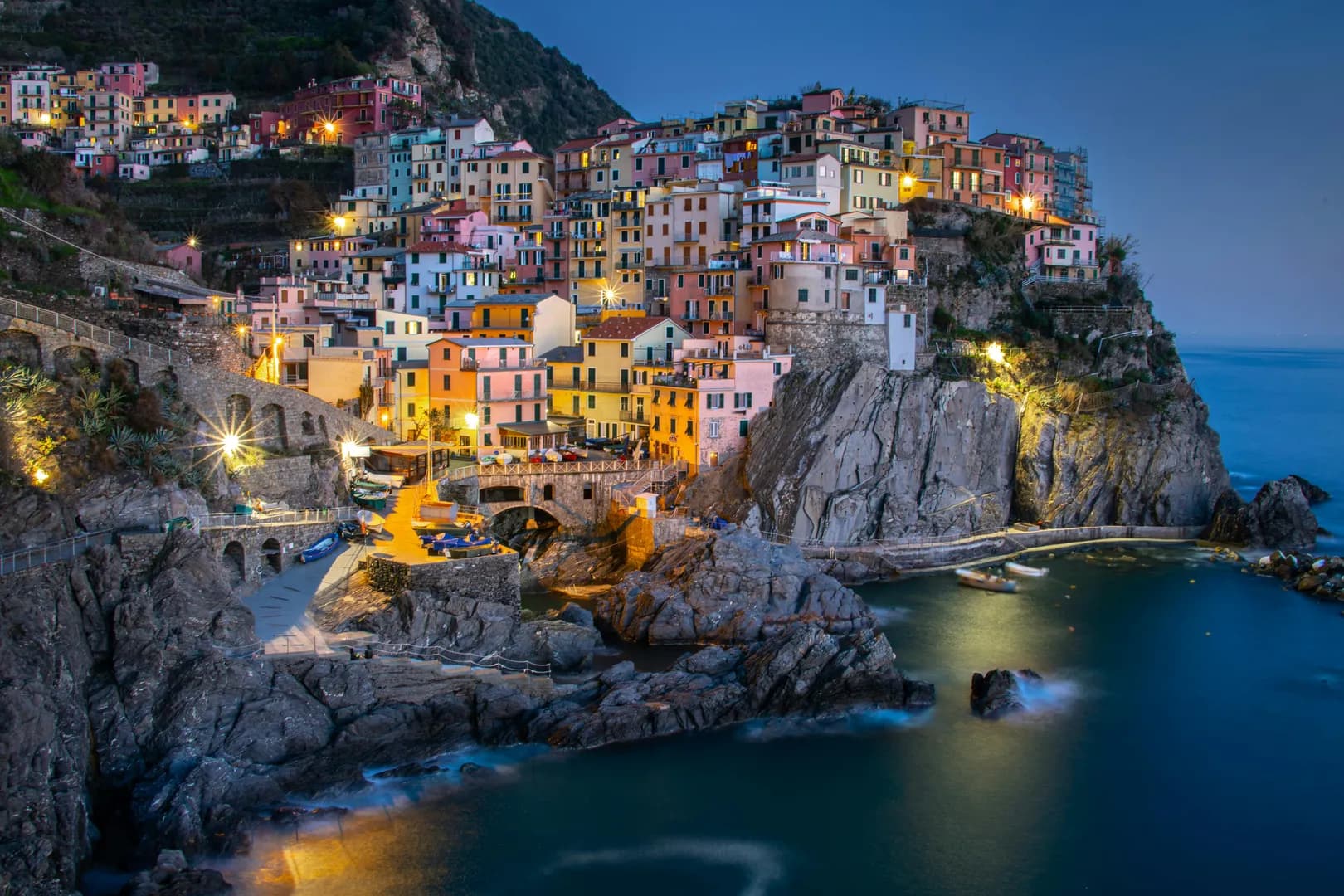
Manarola produces the iconic image of Cinque Terre: houses in every color stacked up a steep hillside above a tiny harbor, often photographed at sunset when the warm light sets the buildings glowing. A small swimming area carved from the rocks provides a place to cool off after hiking, and the village serves as the starting point for a scenic walk through vineyards to Corniglia. Manarola also claims to host the world's largest nativity scene, an installation of lights that illuminates the hillside during the Christmas season, though this has nothing to do with why most visitors come.
Riomaggiore marks the eastern gateway to Cinque Terre and often serves as the first stop for visitors arriving from La Spezia. The village stretches up a narrow valley from a small harbor, its buildings creating a canyon of color. The Via dell'Amore, a famous paved path that once connected Riomaggiore to Manarola, has been closed for repairs for years, a source of frustration for visitors hoping to walk this scenic route. Other paths from Riomaggiore climb into the hills behind the coast, offering views and a chance to see the agricultural terraces that define the landscape.
The Sentiero Azzurro, or Blue Trail, connects all five villages along the coast and represents the classic Cinque Terre hiking experience. The full trail covers roughly twelve kilometers and involves significant elevation changes as paths climb over headlands between villages. Most hikers tackle individual sections rather than attempting the full route in a single day, catching trains between sections to maintain a manageable pace. Trail conditions vary, and some sections close periodically for maintenance, so checking current status before setting out is essential. The fee charged for trail access helps fund the ongoing maintenance of paths and the traditional agricultural terraces.
Beyond the coastal trail, a network of paths climbs into the hills above the villages, passing through vineyards and chestnut forests to sanctuaries and viewpoints that most visitors never see. These higher routes offer solitude and broader perspectives on the dramatic landscape. Some trails connect to neighboring areas, making longer through-hikes possible for ambitious walkers. The terrain is demanding, with steep grades and sometimes rough surfaces, but the rewards justify the effort for those able to undertake them.
The food of Cinque Terre reflects both the sea and the steep terrain that limits agriculture. Anchovies, preserved in salt or fried fresh, appear in many dishes and make an excellent pairing with local white wines. Pesto originated in this part of Liguria, and tasting the authentic version reveals how different it can be from the jarred sauce found in supermarkets worldwide. Focaccia comes in various styles, sometimes plain, sometimes topped with onions or olives. And the farinata, a crispy pancake made from chickpea flour, makes an ideal snack between hikes.
Local wines deserve attention, particularly the Sciacchetrà, a sweet dessert wine made from grapes dried on racks before pressing. Production is tiny, and prices reflect the labor-intensive methods required to farm the steep terraces. The dry white wines of the region provide more affordable drinking, pairing well with the seafood that dominates local menus. Visiting small producers offers insight into the challenges and traditions of Cinque Terre viticulture, and many are happy to share their wines with interested visitors.
Getting around Cinque Terre relies primarily on trains and boats, as cars cannot access the villages. The train line connecting all five villages runs frequently during the day, and a day pass offers unlimited travel within the Cinque Terre zone. Boats provide a scenic alternative when weather permits, with regular service connecting the villages during the summer months. Walking between villages remains the most rewarding option for those with the fitness level to handle the terrain, combining transportation with the main attraction.
Planning a Cinque Terre visit requires balancing the desire to see everything with the practical limitations of the terrain and the impact of crowds. Summer brings intense heat and overwhelming visitor numbers, making spring and fall strongly preferable. Staying overnight in one of the villages, rather than making a day trip from elsewhere, allows you to experience the evening atmosphere after most visitors depart. The quiet of early morning, before the trains start disgorging hikers, reveals the Cinque Terre as a living community rather than merely a tourist attraction.
Experiences We Can Arrange
Quick Facts
Best Time to Visit
Late April to early June and September to October offer the best conditions. Summer is extremely crowded. Spring brings wildflowers, while fall offers grape harvest activities.
Recommended Duration
Two to three days allows you to hike between villages and soak up the atmosphere. Can be combined with nearby Portofino or La Spezia.