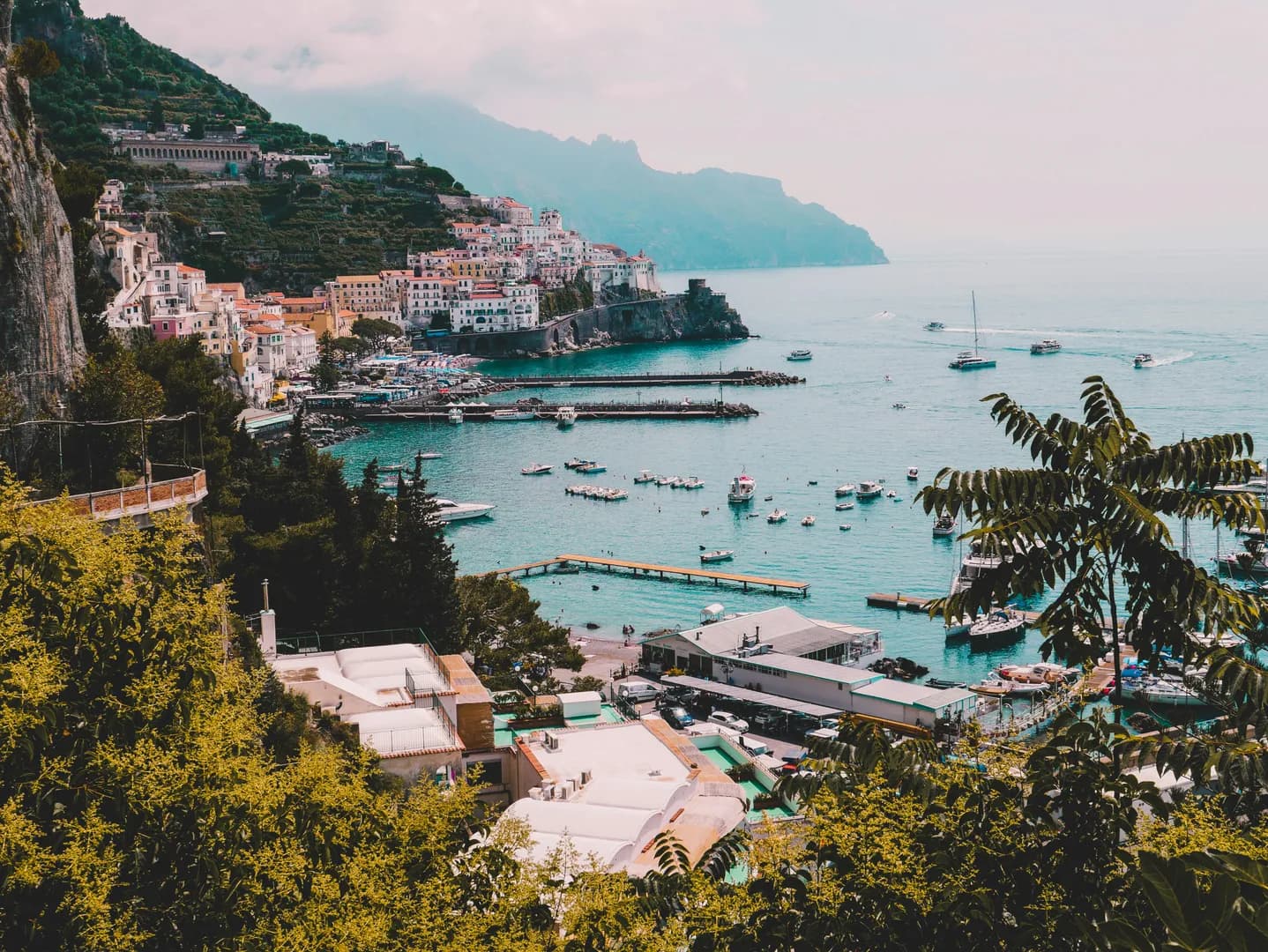
Amalfi Coast
Dramatic cliffs, pastel villages, and Mediterranean charm
The Amalfi Coast represents one of those rare places where nature and human settlement have combined to create something almost impossibly beautiful. Along this stretch of southern Italian coastline, the Lattari Mountains plunge dramatically into the Tyrrhenian Sea, and centuries of inhabitants have carved out an existence on terrain that seems to defy habitation. The result is a landscape of terraced lemon groves, pastel villages clinging to cliffsides, and winding roads that deliver one stunning vista after another.
Positano serves as the iconic image of this coastline, its cascade of pink, peach, and terracotta buildings tumbling down steep slopes to a small beach below. The town looks spectacular from every angle, whether you are arriving by boat from the sea, descending the steep steps from the main road, or gazing from a restaurant terrace as the sunset paints the buildings in warm light. Fashion boutiques and ceramic shops line the narrow pedestrian streets, and the town maintains an atmosphere of relaxed glamour that has attracted artists, writers, and celebrities since the 1950s.
Ravello occupies a different position entirely, perched high on a clifftop with views that have inspired creative minds for centuries. The town is perhaps best known for Villa Rufolo and Villa Cimbrone, whose gardens offer some of the most photographed panoramas in Italy. Richard Wagner found inspiration here for his opera Parsifal, and the annual Ravello Festival continues to honor this musical heritage with concerts in extraordinary settings. The town itself moves at a gentler pace than the coastal villages below, with fewer day-trippers and a more refined atmosphere.
Amalfi gives its name to the entire coast and once stood as one of the great maritime powers of medieval Italy. The town's cathedral, with its striking striped facade and elaborate bronze doors, speaks to this prosperous past. A museum dedicated to the town's history reveals Amalfi's role in developing the maritime compass and establishing one of the oldest naval codes in the world. Today the town serves as a practical base for exploring the coast, with better transportation connections and a wider range of services than some smaller villages.
Between these famous destinations, smaller towns offer their own rewards for those willing to explore. Praiano provides a quieter alternative to Positano, with many of the same views but fewer crowds. Furore is known for its dramatic fjord, a narrow inlet where fishing boats shelter beneath a towering bridge. Minori and Maiori boast the coast's best beaches, making them popular with Italian families. Atrani, tucked beside Amalfi, maintains the feel of a genuine fishing village despite its proximity to tourist crowds.
The food of the Amalfi Coast reflects both the sea and the steep terrain that defines the region. Lemons grow everywhere, and the local variety, sfusato amalfitano, produces the limoncello liqueur that appears at the end of nearly every meal. Seafood dominates menus, from simple grilled fish to elaborate preparations of local catches. Pasta dishes often feature colatura di alici, a fish sauce made from fermented anchovies that traces its roots to ancient Roman garum. And the vegetables grown on those impossibly steep terraces taste of sunshine and sea air.
Getting around the Amalfi Coast requires some planning, as the narrow winding road that connects all the towns tests both drivers and passengers. Many visitors opt to travel by boat, which offers not only practical transportation but also the best views of the coastline. The blue SITA buses provide public transport, though summer crowds can make for cramped conditions. Walking between some towns is possible via ancient pathways, and these routes often provide the most authentic experience of the landscape.
The Path of the Gods deserves special mention as one of Italy's great hiking experiences. This trail traces the clifftops between Agerola and Nocelle, offering views that justify the dramatic name. On clear days, you can see the entire coastline spread out below, with Capri floating on the horizon. The path follows ancient routes that connected mountain communities before roads were built, passing through terraced gardens and abandoned settlements. Early morning starts beat both the heat and the crowds.
Capri sits just offshore and makes an easy day trip from the coast. This island has attracted visitors since Roman times, when Emperor Tiberius built a series of villas here. Today the Blue Grotto remains the most famous attraction, its waters glowing an ethereal blue from sunlight filtered through an underwater cavity. Beyond this tourist magnet, Capri offers excellent shopping, beautiful gardens at Villa San Michele, and the dramatic views from Monte Solaro, accessible by chairlift.
The nearby archaeological sites add historical depth to any Amalfi Coast visit. Pompeii needs no introduction, its streets and buildings preserved under volcanic ash since 79 AD. Fewer visitors make it to nearby Herculaneum, which actually offers better-preserved structures and a more intimate atmosphere. The Greek temples at Paestum, south of the coast, rank among the best-preserved in the world and receive a fraction of the visitors that crowd Pompeii.
Planning an Amalfi Coast trip involves balancing the desire to see everything with the reality of the challenging terrain. Staying in one town and taking day trips works well for some travelers, while others prefer to split their time between multiple locations. The shoulder seasons of May to June and September to October offer the best balance of good weather and manageable crowds. Summer brings intense heat and heavy traffic, though the festive atmosphere and long evenings have their own appeal. Whenever you visit, this extraordinary coastline delivers an experience of natural beauty and Italian culture that few other destinations can match.
Experiences We Can Arrange
Quick Facts
Best Time to Visit
May to June and September to October offer the best balance of weather and crowds. July and August are peak season with higher prices and more visitors.
Recommended Duration
Four to five days allows you to experience the main towns without rushing. Add extra days for Capri and Pompeii excursions.