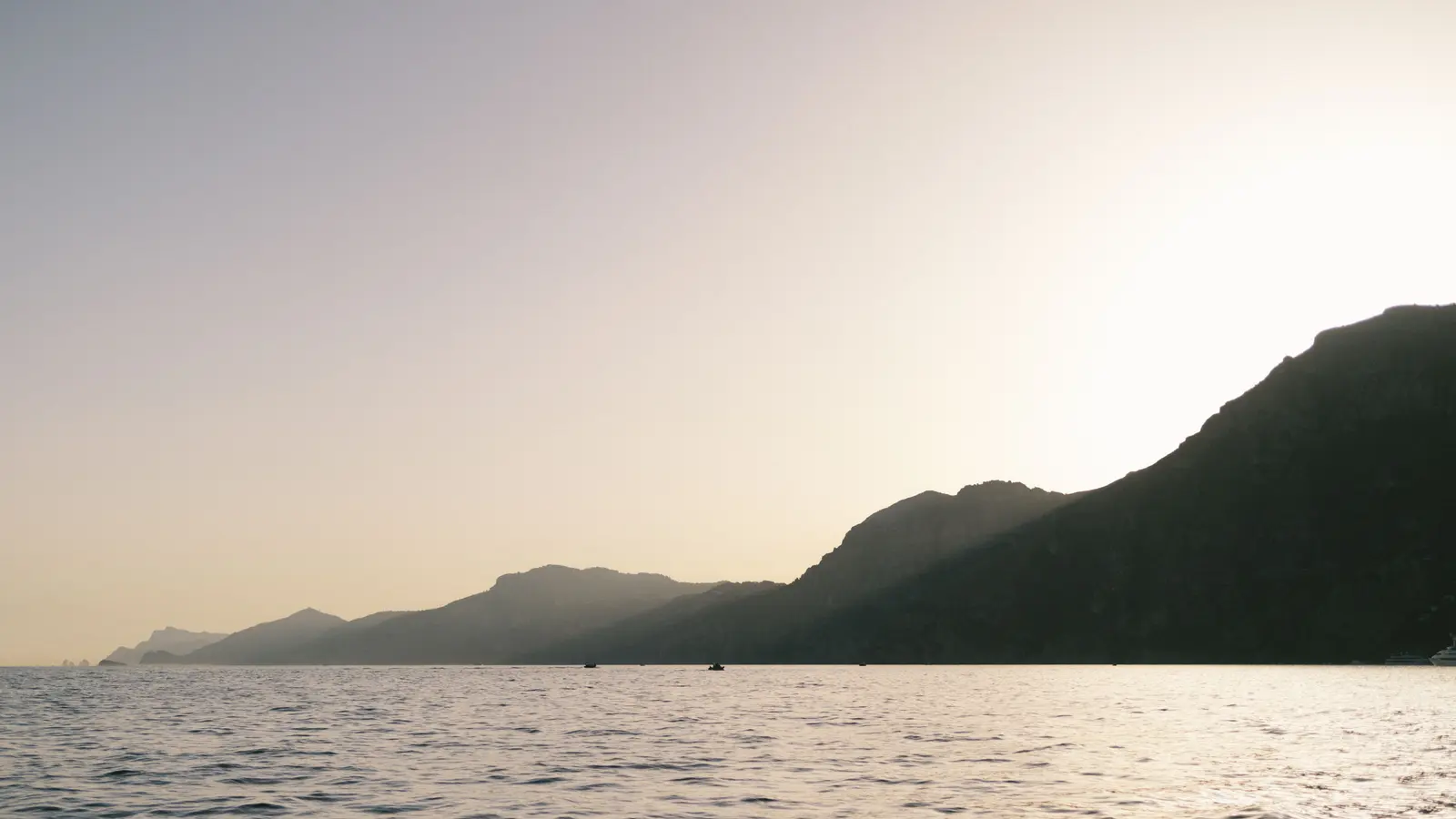

Sicily is not a side trip you bolt onto mainland Italy in three days. It is large, culturally distinct, and split into an east side and a west side that do not connect quickly enough to combine well in under ten days. My direct advice: give Sicily a dedicated trip of at least seven days, pick one coast, and accept you will leave wanting to come back for the other half.
I say this to nearly every client who wants to "add Sicily" to a two-week Italy itinerary already built around Rome, Florence, and Venice. Sicily is roughly the size of Vermont, but its winding roads and terrain mean travel times run longer than the map suggests. It rewards a trip built around it, not squeezed in beside it.
Does Sicily need its own trip, or can I combine it with the mainland?
Sicily deserves its own trip, or at minimum a dedicated week tacked onto the end of a mainland itinerary with no other stops competing for time. The island holds Greek temples older than most of Rome's ruins, a Roman villa with the best-preserved mosaics in the Mediterranean, an active volcano you can walk on, and two distinct regional food and wine cultures. Seeing it in two or three days on the way to somewhere else means seeing almost none of it properly.
In my experience, the trips that go wrong treat Sicily as a quick coastal add-on after Amalfi or Rome. Flights from the mainland add a half-day of logistics on each end, and driving distances are deceptive on a map because roads wind through mountains rather than running straight. Budget a full week for one coast, or ten days to two weeks for both.
Should I focus on eastern or western Sicily?
You cannot do both coasts well in one week, so pick one: the east side (Taormina, Siracusa, Mount Etna, Catania) for Greek theater, baroque towns, and volcano access, or the west side (Palermo, Trapani, Agrigento) for Arab-Norman architecture, salt pans, and the Valley of the Temples. Crossing the island mid-trip eats a full driving day you'd rather spend at a table or a temple.
Here's how the two sides actually differ:
| Eastern Sicily | Western Sicily | |
|---|---|---|
| Base town | Taormina or Catania | Palermo |
| Signature sight | Greek Theatre of Taormina, Mount Etna | Valley of the Temples, Agrigento |
| Food identity | Pistachio (Bronte), granita, Etna wine | Couscous influence, Marsala wine, street food |
| Landscape | Volcano, coastline, baroque hill towns | Salt flats, temples, Norman-Arab Palermo |
| Best for first-timers | Yes — more polished, easier logistics | Better for a second Sicily trip |
| Fly into | Catania (CTA) | Palermo (PMO) |
If this is your first trip to Sicily, I generally steer clients east. Taormina, Siracusa, and Etna sit close enough together for a relaxed week without long transfers. The west rewards travelers who already have a Sicily trip under their belt and want Agrigento's temples and Palermo's markets without rushing.
Should I fly into Catania or Palermo?
Fly into Catania (CTA) for the eastern route, Palermo (PMO) for the west — matching your airport to your coast saves a long transfer on day one. As of 2026, Delta flies nonstop from New York-JFK to Catania year-round, while United and Neos Air run seasonal nonstop service from New York (JFK and Newark) to Palermo, typically May through October.1
Outside those nonstop windows, the more reliable path is a one-stop connection through Rome (Fiumicino) or Milan, both with frequent onward flights to Catania and Palermo on ITA Airways and other carriers.1 Catania's airport sits about 6 kilometers from the city center, a 20-minute transfer, while Palermo's airport is roughly 35 kilometers out, with the Trinacria Express train taking 45 to 60 minutes into town.1
Do I need a rental car in Sicily?
Yes, outside the cities — a rental car is essential for reaching Mount Etna, the Valley of the Temples, Villa Romana del Casale, and countryside wine estates, none practically reachable by public transit. Inside historic centers, a car becomes a liability rather than a help.
Where a car helps, and where it doesn't:
- Skip it: Taormina's old town, Ortigia (Siracusa's island center), and central Palermo are compact, walkable, and largely closed to outside traffic. Parking is scarce, and many centers have ZTL (limited traffic zone) restrictions carrying automatic fines for uninformed drivers.
- Rent it: Mount Etna excursions, Villa Romana del Casale near Piazza Armerina, the Valley of the Temples, wine country around Etna or Marsala, and any beach town off the rail line.
My usual advice: pick up the car when leaving your base city and drop it before arriving in the next one, so you're never dodging a ZTL fine just to park a car you don't need in town.
How long does it take to drive between the key stops?
On the eastern route: Catania to Taormina, 45 minutes to an hour via the A18 toll motorway; Catania to Siracusa, about an hour; Taormina to Siracusa, roughly 75 minutes.2 On the western route: Palermo to Agrigento, 1 hour 45 minutes to 2 hours on the A19/SS640; Agrigento to Trapani, closer to 2.5 to 3 hours on smaller coastal roads.3
These are drive times without stops, and a 45-minute drive can easily become a half-day with a stop at an Etna wine estate or a coastal viewpoint. Treat any posted driving time as a floor, not a ceiling.
How many days do I need for the classic east-coast route?
Seven days is the realistic minimum, covering Catania, Mount Etna, Taormina, Siracusa, and a baroque town like Noto or Ragusa without feeling rushed.4 A common, comfortable structure:
- Day 1: Arrive in Catania, evening stroll through the baroque center.
- Day 2: Mount Etna excursion.
- Days 3-4: Base in Taormina — Greek Theatre, Isola Bella, day trips.
- Day 5: Siracusa and Ortigia.
- Day 6: Noto or Ragusa for baroque architecture.
- Day 7: Return to Catania before departure.
Ten to fourteen days lets you add the Aeolian Islands as a genuine extension rather than a rushed overnight — that archipelago deserves its own planning, which I cover separately.
When is the best time to visit Sicily?
May, June, September, and early October are the strongest windows, with warm but manageable temperatures in the low-to-mid 70s to low 80s Fahrenheit and noticeably thinner crowds than peak summer.5 July and August bring 86-95°F (30-35°C) and the year's heaviest crowds, as Italians and other Europeans take their own summer holidays here.5
September has a catch: it's genuinely the busiest and most expensive month despite the cooler weather, since it combines warm seas with the tail end of the European holiday calendar.5 Want mild weather without September prices? Push toward late September or early October. May remains, in my experience, the single best month for first-timers — warm enough to swim, quiet enough to get a table.
What do I need to book in advance?
Villa Romana del Casale, the Valley of the Temples, the Greek Theatre of Taormina, and any Etna summit excursion all benefit from advance booking, especially June through September:
- Villa Romana del Casale (Piazza Armerina): Open daily 9:00 AM to 7:00 PM. Its 3,500 square meters of Roman floor mosaics across 48 rooms are the most complete collection of their kind anywhere, and it gets crowded midday in summer — book skip-the-line entry if visiting June through August.6
- Valley of the Temples (Agrigento): Open daily 8:30 AM to 8:00 PM in summer (last entry 7:00 PM), with roughly 800,000 visitors a year and peak-season queues of 30 to 60 minutes without a pre-booked ticket.7 Book through the official CoopCulture site; the park doesn't use strict timed slots the way some mainland sites do. Plan 3 to 5 hours for the temple ridge and museum.
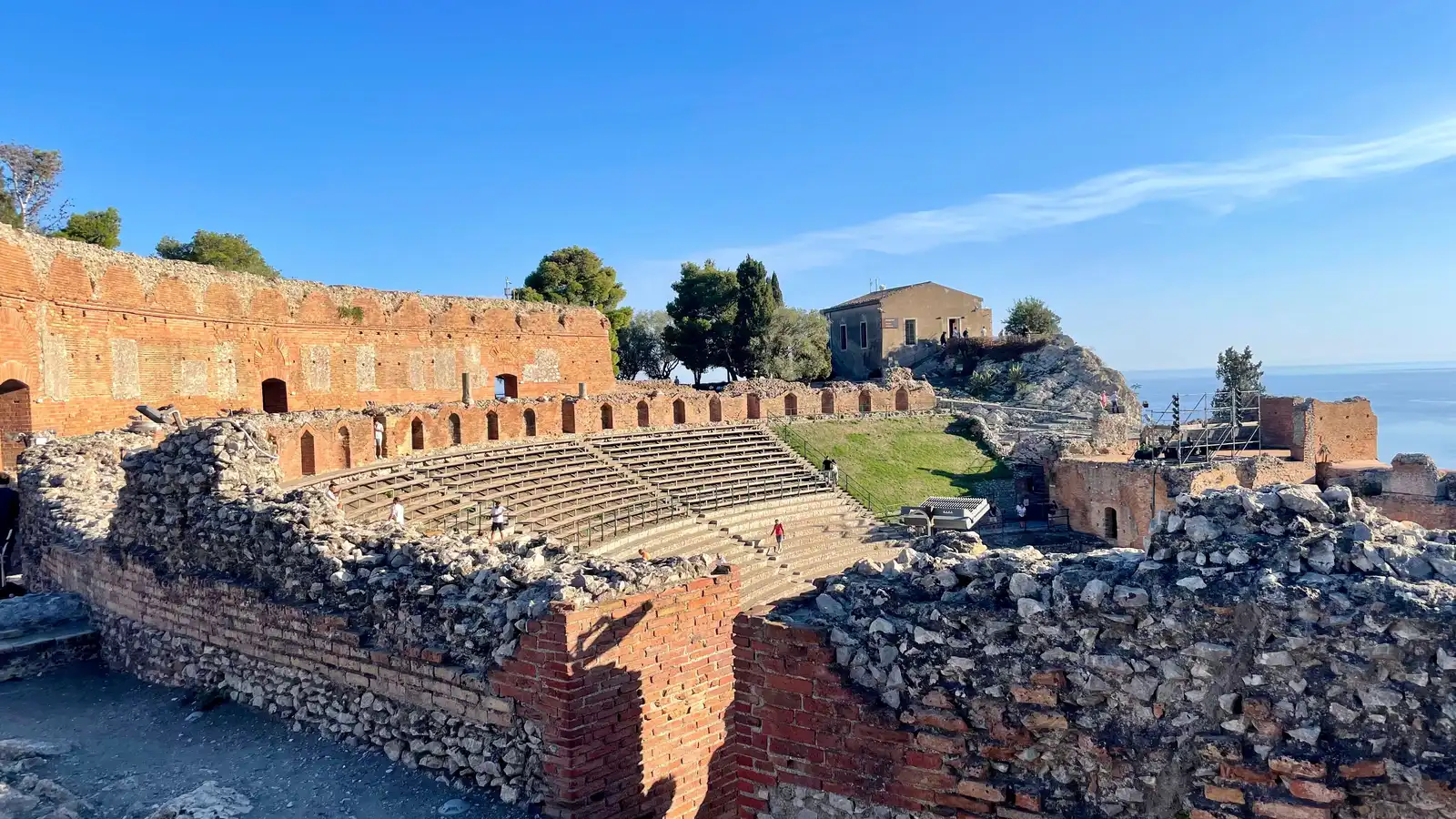
- Greek Theatre of Taormina: Open 9:00 AM to 7:00 PM from May through August, with shorter winter hours. Standard admission runs €10, with special evening openings during the June-to-September opera and concert season keeping the site open until midnight.8 Book online in high season to skip the line.
- Mount Etna summit excursions: The upper craters above roughly 2,900 meters require a licensed volcano guide by regulation — you cannot drive or hike up independently. Cable car and 4x4 tours from Catania or Taormina run daily; book a few days ahead in July and August, when weather cancellations create backlogs.9
What food and wine should I plan around in Sicily?
Sicilian food splits by coast, and the rice ball you order outs you as an easterner or westerner. In Catania and the east, it's arancino (masculine, cone-shaped, echoing Etna's silhouette); in Palermo and the west, it's arancina (feminine, round, shaped like the orange it's named for) — both regions take the naming seriously enough that the wrong word draws a reaction.10 Beyond that debate, a few things are worth building your trip around:
- Bronte pistachios: Grown on Etna's volcanic slopes near the town of Bronte, these earned DOP protection in 2009 and are prized for a chlorophyll-rich green color and intensity unmatched elsewhere.11 They show up in pesto, gelato, and crusted fish; a stop in Bronte or a tasting on an Etna day trip is worth the detour.
- Seafood: Coastal towns on both sides — Siracusa's Ortigia market, Trapani's harbor — build menus around the morning catch. Expect swordfish, sardines prepared pasta con le sarde style, and raw seafood platters near any working port.
- Etna wine: Nerello Mascalese, grown in sandy volcanic soil on Etna's slopes, produces elegant, floral reds that make up roughly 80% of Etna Rosso DOC.12 I send most eastern-route clients to at least one Etna winery lunch; the wine paired with the view over vineyards toward the coast is hard to replicate elsewhere in Italy.
- Marsala wine: Produced exclusively around the western city of Marsala in Trapani province, this fortified wine has held DOC status since 1969 and ranges from bone-dry aperitivo styles to sweet dessert versions.13 For a deeper look at how volcanic soil shapes wines across southern Italy, including Etna, see my guide to southern Italy's volcanic wine country.
What's your honest advice on pacing a Sicily trip?
Build in fewer stops than you think you need, and let driving days be their own thing rather than a transfer squeezed between two sightseeing days. Sicily's real appeal isn't a checklist — it's a granita on a piazza, a two-hour lunch at a vineyard, an evening view of Etna glowing from Taormina. Rushing to fit in one more temple usually means arriving tired and remembering less.
The biggest mistake I see is clients layering a west-side day trip onto an east-side base, because a map makes it look feasible. It rarely is once you account for actual driving and visit times. Pick your coast, build four to seven unhurried days around it, and treat the other half as next trip's plan.
Planning a Sicily trip from the US involves more moving parts than mainland Italy — airport choice, coast selection, timed-entry bookings, and a rental car handoff that has to line up with your route. This is exactly the kind of itinerary I build for clients through Italy Awaits Travel's planning services, matching flights, guides, and accommodations to whichever coast fits your trip. If you'd like help mapping out your own Sicily itinerary, get in touch and we'll start with your dates and priorities.
FAQ
Can I see both eastern and western Sicily in one week?
Not comfortably. Crossing the island mid-trip costs a full driving day, leaving only two or three rushed days per coast. One week works best focused on a single coast; save the other half for a return trip.
Is Sicily safe and easy for first-time independent travelers?
Yes. Sicily's tourist areas are well-equipped for independent travelers, with English widely spoken at hotels and major sights. The main adjustments are assertive local driving and ZTL zones in historic centers, which carry automatic camera-issued fines for unauthorized entry.
What's the best base town for exploring eastern Sicily?
Taormina is the most popular base for its central location and walkable historic core, putting Etna, Siracusa, and the Ionian coast within a manageable drive. Catania works well too and is generally less expensive, with easier airport access.
Do I need to speak Italian to travel in Sicily?
No, though a few basic phrases help outside major tourist areas. English is common in Taormina, Siracusa's center, and Palermo's main sights; it thins out in smaller inland towns, where a translation app covers the gap.
Is Sicily more affordable than mainland destinations like Amalfi or Tuscany?
Generally yes. Accommodations, dining, and rental cars typically run lower than comparable options on the Amalfi Coast or in central Tuscany, even in high season, though Taormina prices have risen closer to mainland resort-town levels in recent years.
Should I add the Aeolian Islands to my Sicily trip?
Only with ten or more days. The islands are a worthwhile add-on from the eastern coast, but reaching them requires a hydrofoil transfer from Milazzo, and doing them justice takes two to three additional days beyond the mainland portion of your trip.
References
- Visit Sicily official tourism board — flight connections to Sicily from the US and Europe (2026). https://www.visitsicily.info/en/flight-connections-sicily/
- TravelMath — driving time and distance, Catania to Taormina. https://www.travelmath.com/driving-time/from/CTA/to/Taormina,+Italy
- ViaMichelin — route planner, Palermo to Agrigento driving directions. https://www.viamichelin.com/routes/results/palermo-90121-palermo-sicily-italy-to-agrigento-92100-agrigento-sicily-italy
- Along Dusty Roads — eastern Sicily itinerary guide, 7-14 day structures (2026). https://www.alongdustyroads.com/posts/east-sicily-itinerary
- Rick Steves — Best Time to Go to Sicily, month-by-month weather and crowd guide. https://www.ricksteves.com/europe/italy/best-time-to-go-to-sicily
- Villa Romana del Casale official visitor information — hours, mosaics, and booking (2026). https://villaromanadelcasale.com/en/
- La Valle dei Templi (Valley of the Temples) official site — hours, tickets, and visitor numbers (2026). https://www.lavalledeitempli.it/en/travel-guide/timetables-and-tickets/
- Parco archeologico di Naxos e Taormina — official ticketing and hours for the Teatro Antico di Taormina (2026). https://parchiarcheologici.regione.sicilia.it/naxos-taormina/en/biglietti/teatro-antico-di-taormina-2/
- Etna Summit Craters — official guided excursion information and regulations for summit access. https://www.etnasummitcraters.com/
- Visit Sicily official tourism board — Arancino and Arancina regional naming history. https://www.visitsicily.info/en/ricetta/arancino-and-arancina/
- Visit Sicily official tourism board — the Bronte Pistachio DOP designation and cultivation. https://www.visitsicily.info/en/sapore/the-bronte-pistachio/
- Wine Folly — Nerello Mascalese and Etna Rosso DOC composition. https://winefolly.com/deep-dive/amazing-red-nerello-mascalese/
- Wine with Seth — Marsala DOC wine region history and regulations. https://www.winewithseth.com/winewiki/marsala-doc/