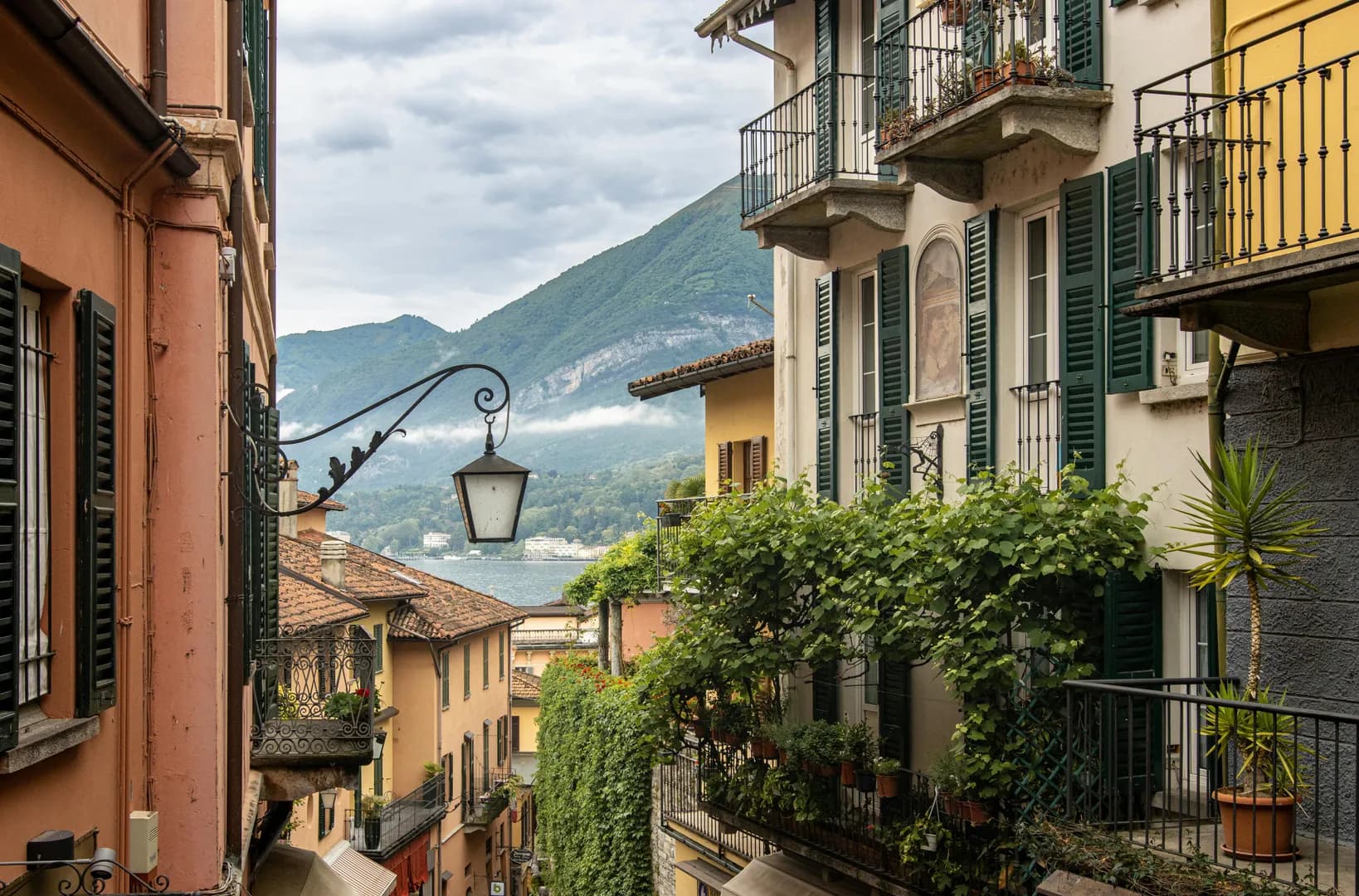
Lake Como
Elegant villas on serene Alpine waters
Lake Como has drawn admirers since ancient Roman times, when wealthy citizens first built villas along its shores to escape the summer heat of the cities. That tradition of elegant retreat continues today, with celebrities, aristocrats, and discerning travelers sharing the shores of what many consider Italy's most beautiful lake. The combination of dramatic Alpine scenery, crystal-clear water, and centuries of cultivated beauty creates an atmosphere of refined pleasure that few other destinations can match.
The lake occupies a deep glacial valley in the foothills of the Alps, its distinctive inverted Y shape creating three branches that meet at the promontory of Bellagio. The surrounding mountains rise steeply from the water, their slopes terraced with gardens and dotted with villages that have clung to these hillsides for centuries. A microclimate created by the lake and the sheltering mountains allows Mediterranean plants to flourish at this northern latitude, filling villa gardens with camellias, azaleas, oleanders, and citrus trees that seem improbable given the alpine surroundings.
Bellagio earns its description as the Pearl of the Lake through a combination of perfect position and cultivated charm. Sitting at the point where the three branches meet, the town offers views in every direction and catches breezes that provide relief on summer days. The stepped streets of the old town climb from the waterfront to the hilltop, lined with shops selling silk scarves (silk production has a long history in this region) and restaurants with terraces overlooking the water. The gardens of Villa Serbelloni and Villa Melzi offer two of the lake's finest horticultural experiences, the former occupying a private promontory with views of all three branches.
Varenna, on the eastern shore, presents a quieter alternative to Bellagio. This compact village charms visitors with its waterfront promenade, the Passeggiata degli Innamorati, which winds between lake and cliff in a setting ideal for the romantic walks its name suggests. The gardens of Villa Monastero, built on the site of a former Cistercian convent, stretch along the lakeshore in a series of terraces filled with exotic plants and classical statuary. Villa Cipressi nearby offers smaller but equally enchanting grounds. Both villas rent rooms, providing the rare opportunity to stay within these historic properties.
The western shore between Tremezzo and Lenno holds perhaps the lake's most famous attractions. Villa del Balbianello occupies a wooded promontory with gardens that seem to float above the water, a setting so photogenic that film productions from Star Wars to James Bond have used it as a location. Reaching the villa requires either a boat ride or a walk along a lakeside path, adding to the sense of discovery. Villa Carlotta nearby presents more formal gardens famous for their spring azalea and rhododendron displays, along with a museum containing neoclassical sculptures and Romantic paintings.
Como town, at the southern tip of the lake's western branch, serves as the main gateway for visitors arriving from Milan. The town deserves more than a quick transfer, with its medieval walls, Gothic cathedral, and pedestrian shopping streets offering a proper urban experience. The funicular railway to Brunate provides panoramic views over the lake and access to hiking trails in the hills above. Como also provides the most practical base for visiting other lakes in the region, with Lake Lugano in Switzerland and smaller Lake Lecco both within easy reach.
Travel around Lake Como relies primarily on boats, with a combination of car ferries, passenger ferries, and fast hydrofoils connecting the lakeside towns. The boat services operate year-round, though schedules are reduced in winter. The slow ferry crossing from Bellagio to the western shore, taking in views of grand villas and mountain peaks, ranks among the great boat journeys in Europe. Having a car allows access to viewpoints and restaurants in the hills above the lake, but parking in the lakeside towns can be challenging, and the narrow roads demand careful driving.
Hiking opportunities abound in the hills and mountains surrounding the lake. The Greenway del Lago offers a relatively gentle walk along the western shore, passing through villages, gardens, and olive groves over its ten-kilometer length. More ambitious routes climb to mountain refuges and high viewpoints, with the trail network extending into the Alps proper for experienced hikers. The combination of lake views, mountain scenery, and traditional villages makes even short walks rewarding.
Food around Lake Como draws on both the lake and the surrounding mountains. Mission fish from the lake, a small relative of trout, appears on many menus, often prepared with sage and butter in a preparation that lets its delicate flavor shine. Polenta serves as the traditional starch, made from corn or buckwheat and paired with cheese, mushrooms, or braised meats. The hills produce excellent cheeses and salumi, and restaurants range from simple lakeside trattorias to some of northern Italy's finest dining establishments.
The silk industry that once drove the local economy has declined but not disappeared, and Como remains a center for luxury textile production. Shops in Como town sell scarves, ties, and fabrics that may cost more than their tourist-market counterparts but represent genuine Italian craftsmanship. Several museums document the history of silk production in the region, providing context for this local tradition.
Planning a Lake Como visit means choosing a base from among several appealing options. Bellagio offers the most iconic setting but comes with crowds and higher prices. Varenna provides charm with slightly more breathing room. Como town makes sense for those who want urban amenities and easy Milan connections. The western shore villages offer proximity to the most famous villas. Some visitors split their stay between locations, taking advantage of the boat connections to experience different parts of the lake.
The seasons each bring different pleasures to Lake Como. Spring sees the gardens at their peak, with azaleas, rhododendrons, and wisteria putting on spectacular displays. Summer brings warm weather perfect for swimming and boat excursions, though also the largest crowds. Fall offers mild temperatures, changing foliage, and a more relaxed atmosphere. Winter sees many tourist facilities close, but the lake takes on a romantic, misty quality that appeals to those seeking solitude. However you time your visit, Lake Como rewards with beauty that has captivated visitors for over two millennia.
Experiences We Can Arrange
Quick Facts
Best Time to Visit
April to October, with May to June and September offering the best weather with smaller crowds. Many villa gardens are at peak beauty in late spring.
Recommended Duration
Three to four days for a relaxing experience. Can be combined with Milan, which is about an hour away, or a trip to Switzerland.