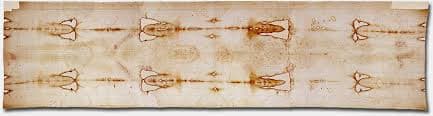

The Shroud of Turin is both a venerated relic and a subject of intense academic debate. Whether viewed through the lens of faith or scientific inquiry, it remains one of the most compelling artifacts in human history.
What Is the Shroud of Turin?
The Shroud, or Sindone in Italian, is the supposed burial cloth of Jesus. According to the passion narratives found in the books of Matthew, Mark, Luke, and John, after Jesus died by crucifixion his body was cleansed with oils per Jewish tradition, wrapped in a long swath of linen, and then interred in a tomb.
The Shroud today resides in the Cathedral of St. John the Baptist located in Turin, Piedmont, a city best reached as part of a wider northern Italy journey with careful attention to train travel and timing. It is the most studied relic in history, and its existence is often clouded in mystery and controversy. The faithful do not question the Shroud's origins, and the beauty of relics as archaeological artifacts is that they persist in their primary functions. Relics are venerated and used today just as they were intended centuries ago.
Is This the Actual Burial Cloth of Jesus Christ?
Most scholars accept Jesus as a historical figure, and the textual evidence supported by the gospels is what we would call a stable text. This means the story of the trial, crucifixion, and the burial of Jesus has endured even while multiple Christian cults were coexisting from the 1st to 4th centuries.
The 1988 Investigation
There have been periodic publications on the Shroud, the most famous being the 1988 investigation casting doubt on its declared origins. The conclusion of this publication was that the relic could not have been older than the 14th century and was indeed a Medieval or Renaissance novelty.
The Shroud for years was considered controversial and therefore was shunned by academics.
New Research in the 2010s
In the 2010s, renewed interest and advanced technology opened the door to additional testing. A multi-national team of scholars found that the 1988 examination of the Shroud had been flawed for multiple reasons.
The early scrutiny investigated parts of the linen that were sewn onto the Shroud after a horrific fire in 1532. Before the Shroud had made its way to Italy, it had been under the charge of the Poor Clares at Saint Chapelle in Chambery, France. The fire had burnt the reliquary and the Shroud itself. The Poor Clares, nuns of the Franciscan order, helped mend the Shroud with linen that was contemporaneous to their 16th century time period. The church fire and the mending of the Shroud was mentioned in the Duke of Savoy's letters explaining his purchase of linen cloth for the Shroud's restoration and a new reliquary to house it.
Pollen and Floral Analysis
There have also been studies of floral and pollen remains detected on the linen bringing the date to at least the 8th century AD and concluding the pollen was native to the area around Jerusalem.
The 2020 Studies
Further studies of the Shroud, most notably in 2020, revealed that the injury patterns along with markings on the forehead support the textual description of the torture and crucifixion of Jesus. Questions arise with the bloodstains' persistent red hue. However, it was concluded some blood elements detected on the Shroud were in fact consistent with chemicals released in the body under great stress or torture, one of them being bilirubin which may have contributed to the enduring red color.
The 2022 WAXS Analysis
The newest 2022 publication used technology called WAXS (Wide Angle X-ray Scattering) to examine the overall degradation of the Shroud and concluded that it was almost 2000 years old and originated from the Levant area of the Middle East.
A Compelling Artifact
We must ask ourselves: what kind of artifact is important enough to keep for 2000 years and whose image portrays torture, crucifixion, and the wearing of a crown of thorns? Regardless of one's faith, the Shroud of Turin continues to amaze, inspire, and promote multi-disciplinary investigations into its origins. Many travelers pair a visit to Turin with time among Rome's own great basilicas or a classic Rome itinerary, weaving relics and religious history into a broader Italian journey.
Frequently Asked Questions
Where is the Shroud of Turin located?
The Shroud resides in the Cathedral of St. John the Baptist in Turin, Piedmont, Italy. It is typically kept in a sealed, climate controlled case and is only displayed during special occasions.
Why was the 1988 carbon dating considered flawed?
The 1988 examination tested parts of the linen that were sewn onto the Shroud after a fire in 1532. The Poor Clares, Franciscan nuns who mended the Shroud, used linen from their own 16th century time period, which is what was actually tested.
What did modern testing reveal about the Shroud's age?
A 2022 study using WAXS (Wide Angle X-ray Scattering) technology examined the degradation of the fabric and concluded the Shroud was almost 2000 years old and originated from the Levant region of the Middle East.
Can I see the Shroud of Turin?
The Shroud is rarely displayed publicly. Special viewings occur during significant events, such as during the 2025 Jubilee year when it will be on display in May and June. Check with the Cathedral of St. John the Baptist for current viewing schedules, and plan around Italy's best travel months if you want to combine a Turin visit with the rest of your trip.
What do the markings on the Shroud show?
Studies reveal injury patterns and markings that are consistent with the gospel accounts of crucifixion and torture, including marks on the forehead consistent with a crown of thorns, wounds on the wrists and feet, and evidence of scourging.
References
- Nature journal publication of the 1988 radiocarbon dating study of the Shroud of Turin.
- Multi-disciplinary studies from the 2010s reexamining the 1988 dating methodology and sample selection.
- Duke of Savoy correspondence documenting the 1532 fire and subsequent restoration of the Shroud.
- Pollen analysis studies identifying flora native to the Jerusalem region on the Shroud.
- 2020 medical studies analyzing injury patterns and blood chemistry consistent with crucifixion trauma.
- 2022 WAXS (Wide Angle X-ray Scattering) study on fabric degradation dating the Shroud to approximately 2000 years ago.